Founders
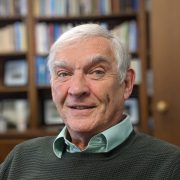
Dr. Alan McIlhenny (Co-Founder) started his career as a high school mathematics teacher in Belfast, Northern Ireland followed by six years as Head of Mathematics in a college in the Seychelles (Indian Ocean) and four years as a professor of mathematics education in Tribhuvan University, Nepal. With the help of Nepali colleagues, he co-authored a book on the teaching of large classes and completed his Ph.D. at the University of Surrey in UK, researching alternative approaches to schooling.
Dr. McIlhenny was the Principal and Founder of the Kathmandu International Study Centre, a unique high school in Nepal catering to the needs of young people from many nationalities. After eleven years of service in Nepal, he returned to Northern Ireland and became the Director of Tearfund for Ireland. This gave Dr. McIlhenny hands-on experience of the work with street children and AIDS orphans in a number of countries around the world. This combination of development and educational experience uniquely prepared him to develop Open Schools. Dr. McIlhenny has been consulted on education/development problems in Nepal, India, Seychelles, Pakistan, Bhutan, Burkina Faso, Thailand, the Philippines, Brazil, and Bolivia.
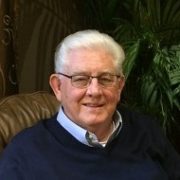
Dr. Philip M. Renicks, Ed.D. (Co-Founder) remarked that he was first confronted with the stark reality for the need of a non-traditional approach to education while visiting a Christian school in South Africa. He said, “as I stood on the beautiful green lawn of a Christian school and looked across the street at a large informal settlement with hundreds of children not in school, I was resolved to change that situation. I came home and wrote a position paper on Children at Risk and later discovered that Dr. Alan McIlhenny in Northern Ireland had written a similar paper.” We teamed up to host a Children at Risk task force in April 2002 to determine the special needs of this unique group of children. This was the beginning of Open Schools Worldwide.
Dr. Renicks has been involved in education for more than 50 years in every capacity from teacher, primary school principal, senior school principal and university professor. He was a missionary to Ecuador, the Vice President of ACSI Global for 22 years and has travelled extensively in the developing world with the goal of providing quality Christian education to children from every socio-economic background.
History Timeline
2001
Dr. Phil Renicks and Dr. Alan McIlhenny correspond and discover a shared vision for the education of marginalised children.
Dr. Renicks organises a Children-at-Risk Task Force in Johannesburg with Alan as facilitator.
April 2002
September 2002
Alan resigns from Tearfund and joins ACSI to develop the “Children-at-Risk” project.
Alan and Phil develop a plan, meet like-minded people, drink lots of coffee, identify curriculum writers, and raise funds.
2003
2004
Writing and field-testing new curriculum with street children in Cape Town and Pietermaritzburg, South Africa produce results: the curriculum is inadequate, so it’s discarded and the process starts over again. (Still drinking lots of coffee.)
The first project is launched with new curriculum at The Kings Court Christian School in the Limpopo province.
August 2005
2006
Vivian Subramoney becomes Director of the team in South Africa; new projects are started in Johannesburg, Cape Town, Eastern Cape, and Limpopo provinces.
The ACSI Children-at-Risk Project develops a partnership with TWR (formerly Trans World Radio) and Kerus Global Education to serve children in Swaziland through local tutorial groups supported by radio broadcasts.
2007
2008
The possibility of expanding into Uganda, the Philippines, and Botswana is explored.
TWR and ACSI establish Open Schools Worldwide as an independent mission to carry on the work.
July 2010
2010-2018
- Open Schools serves children in Kenya, Zimbabwe, and Zambia – in addition to the ongoing projects in South Africa.
- Phil Peters serves as the director during a transitional interim phase.
- Open Schools explores helping Beyond Borders, a ministry of TeachBeyond serving refugee children on the Greek island of Lesbos.
Open Schools joins the TeachBeyond family.

2019
2020
- Angie Pape appointed as the Executive Director
- The pandemic redefines how we are able to proceed with projects
- ‘Kilometers for Kids’ is launched to raise funds across the globe
- Open Schools Brazil is established. Translation of the curriculum into Portuguese begins
- Lockdown regulations prevent contact teaching in many countries
2021
2022
- Open Schools celebrates 20 years at the FarBeyond conference in Slovenia
- More than 4,000 children enter the program in Uganda
- Translation work into Spanish begins and the Dominican Republic commences the first pilot program
- Ghana and Liberia join the Open Schools family
- Open Schools expands its reach to Lesotho, Mexico, Rwanda, Burundi and Nigeria
- The scope and sequence for the Level 2 curriculum was developed
- The beneficiary numbers rose from 3,670 in 2022 to 8,728 in 2023
2023
2024
- The number of learners rose from 8,728 to 14,806
- ’Trekking for Change’ fundraiser in Nepal
- First West Asia project
- Curriculum translations include: Portuguese, Spanish, Bangla and Afrikaans.